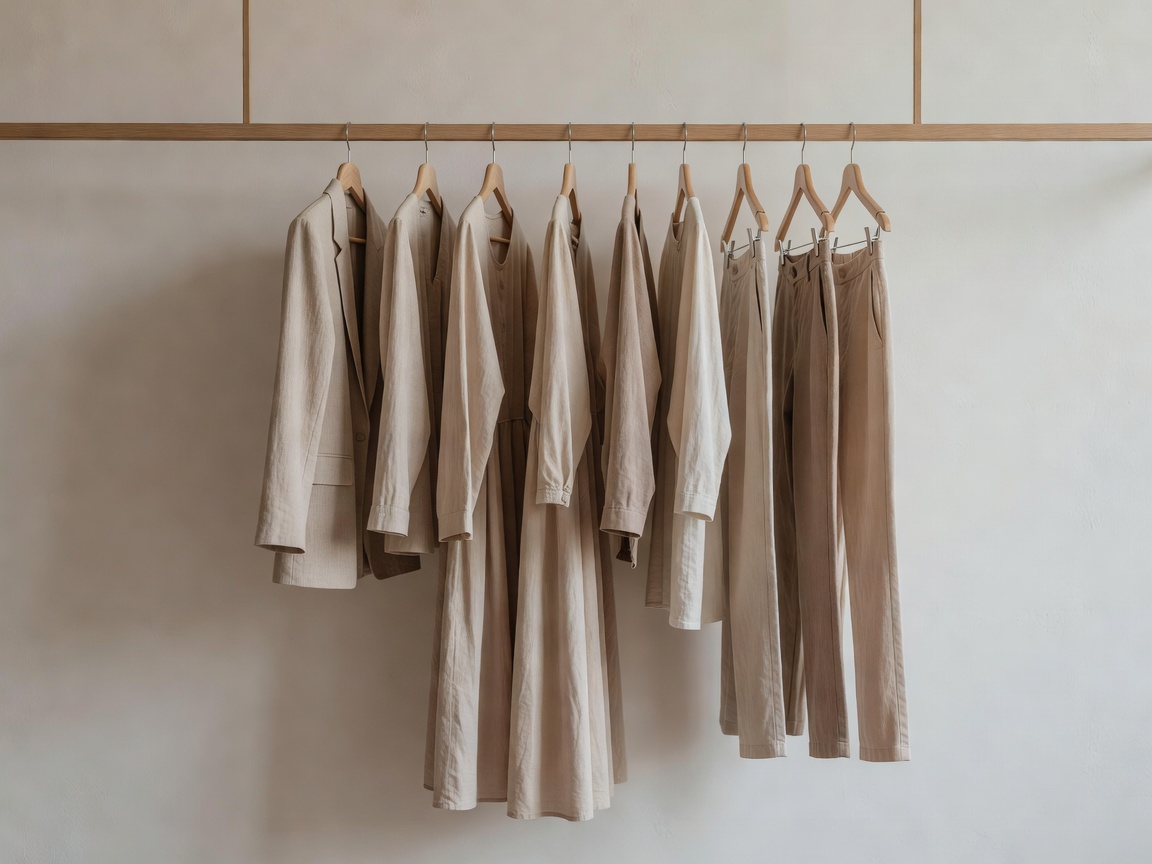
The fast fashion paradigm relies on planned obsolescence and hyper-fast micro-seasons. In contrast, the 10-year capsule wardrobe is engineered around structural yarn density, natural stress-relieved seams, and versatile neutral colorways.
1. The 30-Item Breakdown Engine
To establish a fully functional, all-season wardrobe without clutter, restrict your selection to exactly 30 high-mileage garments:
- Outerwear (4 pieces): 1 Heavy natural wool overcoat, 1 organic canvas trench coat, 1 structural linen blazer, 1 weather-resistant hemp jacket.
- Tops & Knitwear (10 pieces): 4 Heavyweight organic cotton tees (200+ GSM), 2 GOTS-certified linen button-down shirts, 2 organic merino wool sweaters, 2 unbleached hemp long-sleeves.
- Bottoms (6 pieces): 2 Selvedge organic cotton denim trousers, 2 relaxed linen trousers, 2 heavy organic cotton twill chinos.
- Footwear (4 pairs): 1 Vegetable-tanned leather boot, 1 unbleached canvas low-top sneaker, 1 handcrafted leather loafer, 1 sturdy walking sandal.
- Layering & Accessories (6 pieces): 2 Wool scarves, 1 organic cotton card holder, 1 canvas utility tote, 2 minimalist leather belts.
"Limiting your core garments to 30 well-engineered items reduces morning decision fatigue by 70% and lowers your personal textile footprint by over 450 kg of CO2 equivalent per decade."
2. Selecting Structural Weaves for Longevity
Not all cotton or linen is created equal. When purchasing garments designed to last a decade, verify the fabric weight (GSM - grams per square meter). Low-grade t-shirts sit at 120 GSM, whereas a 10-year garment demands at least 210 GSM for knitwear and 300+ GSM for woven trousers.
3. Maintenance for Ten-Year Endurance
Over-washing accounts for 60% of premature garment failure. Cold wash organic cotton inside out, air dry away from direct UV sunlight to prevent tensile degradation, and use wooden shoe trees for leather preservation.