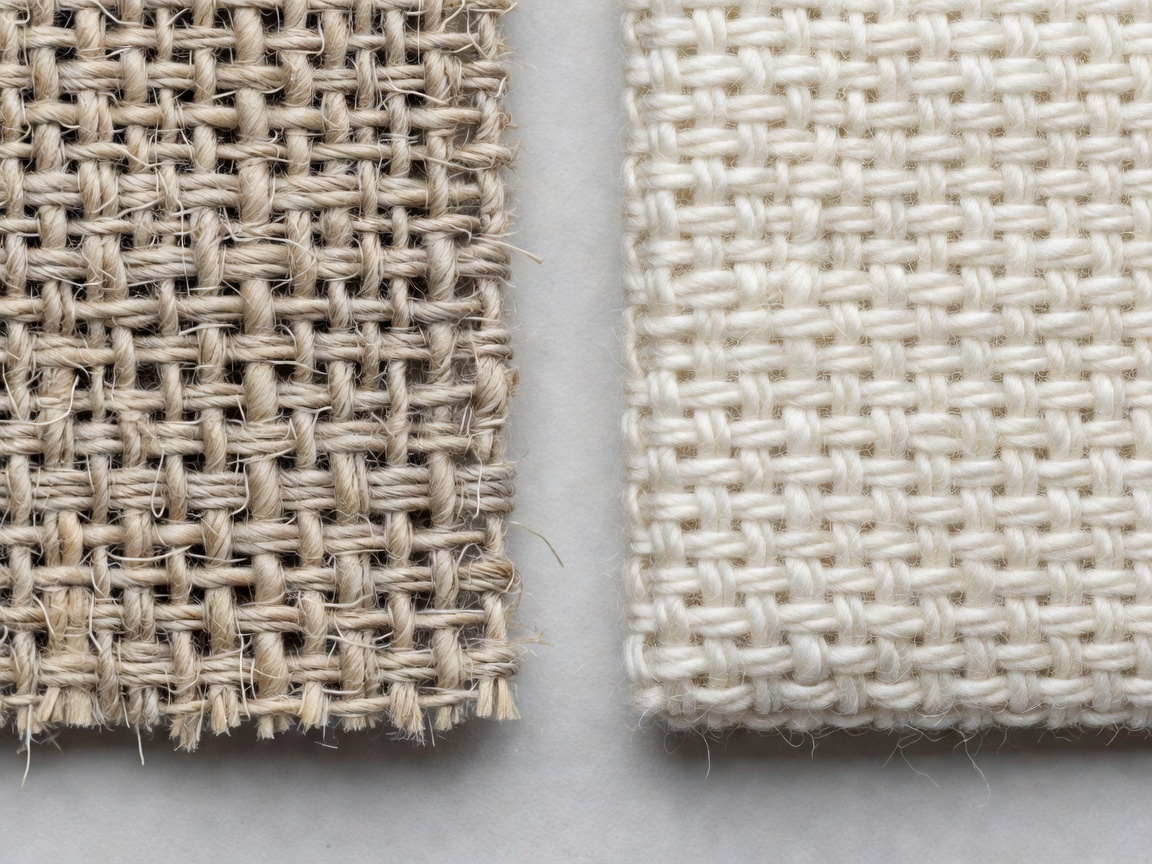
Choosing truly sustainable apparel requires understanding agricultural fiber inputs. While synthetic polyester releases over 1,900 microplastics per wash, natural plant fibers decompose in months when untreated with synthetic resins.
1. Empirical Metric Comparison
| Metric | Flax Linen | Industrial Hemp | Organic Cotton |
|---|---|---|---|
| Water Needed (L/kg) | ~2,500 L | ~2,100 L | ~7,000 L |
| Tensile Strength | 3x Stronger than Cotton | 8x Stronger than Cotton | Standard Baseline |
| Pesticide Requirement | Near Zero (Natural Rain) | Zero (Natural Weed Suppressant) | Zero (Organic Standards) |
| Soil Impact | Rotational Restorative | Phytoremediative (Removes Toxins) | Requires Soil Rotation |
2. Flax Linen Resilience
Flax linen is cultivated primarily in Western Europe with natural rainfall, eliminating energy-intensive irrigation. Linen fibers gain tensile strength when wet, rendering them resistant to mechanical abrasion during repeated laundry cycles.
3. Hemp: The Unsung Bio-Engineered Giant
Hemp absorbs up to 15 tons of CO2 per hectare during growth, making it one of the most effective carbon-sink agricultural crops on planet Earth. Its deep taproots break up compacted soil, returning essential nitrogen back into the arable land layer.