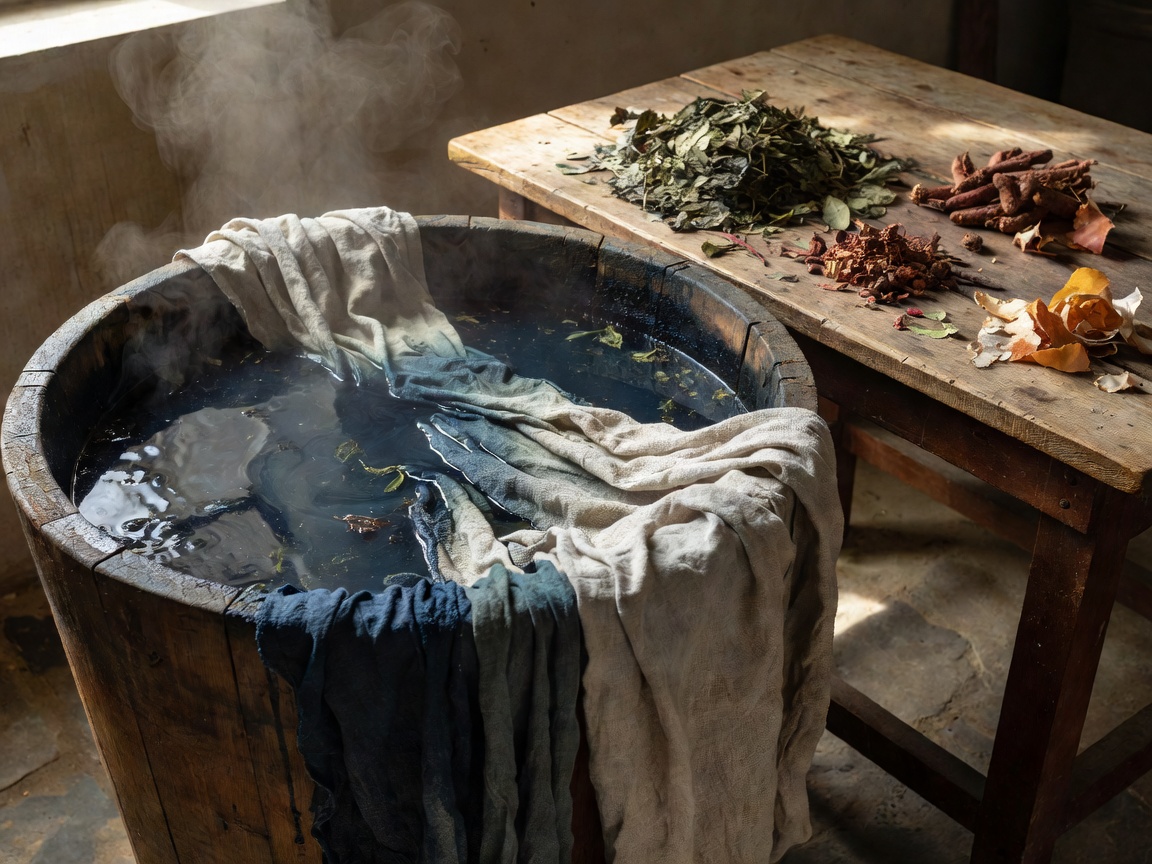
Synthetic garment dyes often contain azo compounds and heavy metal fixatives that leech hazardous runoff into local watersheds during manufacturing. Botanical dyeing revives ancient circular methods using non-toxic food waste, forest bark, and plant leaves.
1. The Science of Non-Toxic Mordanting
Plant fibers like linen and organic cotton require a binder (mordant) to lock natural pigment into the cellulose structure. Avoid heavy metal chrome or copper mordants; instead use soy milk baths or aluminum potassium sulfate (potash alum) derived from natural mineral sources.
2. Palette Creation from Food Remnants
You do not need rare botanical specimens to dye effectively. Common kitchen yield includes:
- Avocado Pits & Skins: Yields a rich dusty rose and blush shade due to high tannin concentrations.
- Yellow Onion Skins: Produces deep ambers, mustard yellows, and warm honey tones.
- Pomegranate Rinds: Provides buttery olive greens when combined with a mild iron water bath.
3. Cold Curing and Color Fastness
Once dyed, submerge the fabric in neutral pH water and allow it to slow-cure in a shaded area for 48 hours. Wash exclusively with pH-balanced eco-soaps to preserve color vibrance across decades.